Tuesday, February 25, 2014

Is microbe transplant possible?

            As of now you may know that microbes and bacteria aid our existence. Yet a simple question like; Can there be a transplant to help the survival of a human, in specific a bacteria transplant? Well questions like these are the reason why science is where it is at now. Way ahead from where it was fifteen to twenty years ago. Dr. Khoruts, a gastroenterologist from the University of Minnesota, came across a patient in 2008 suffering from a gut infection known as Clostridium difficile. The infections were so extreme it had left her in a wheelchair wearin
g diapers. Dr. Khoruts had given the patient some medication which was of no help what so ever. At one point the infection was winning over Khoruts that was a the verge of loosing his patient from a bacteria. Then the idea of doing a transplant, but not any transplant. He would gather bacteria from her husband and place it on the affected area. Surprisingly the infection was getting killed in a matter of weeks.
Scientist are so fascinated about how much bacteria is known to help that the forget to research the bacteria that harms us and why. As the scientist showed that the patient had not a lot of normal bacteria living inside her and caused Clostridium to spread and almost kill her. The doctors and scientist involved were so fascinated they had forgotten to figure out why her normal bacteria count was low and instead focused on the fascinating idea of microbes making up our body.

As this attacks how we can cure deadly microbes in our body, it doesn’t identify why it happens and there fore this article lacks that perspective and forcing to one side of the argument. If it had incorporated how we can prevent such bacteria to colonize inside us it would be a perfect article. Et it lacks and makes it bias.

Wednesday, February 19, 2014

Oxygen-less Microbes


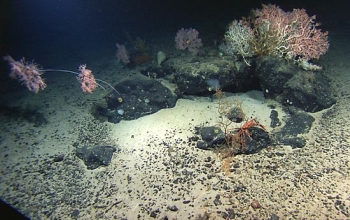
            Ever thought of the possibility of any type of organism to live under water? Well if you did; that thought was indeed true. Dr. Roy, a geomicrobiologist fro the university of Aarhus had gathered a sample of a high concentrated layer of sediment under the sea; about 100 feet below the surface. The location this took place was on the north pacific gyre off Hawaii. As they were gathering their samples, they were hoping to find any microbes or even tracks of microbes existing 100 feet below surface. Unable to gather any specific organism or microbe, they were able to find signs of microbes that were living in the layer that had retrieved. Dr. Roy had colleagues help him with his research, especially with the calculations on how much oxygen should have been present from the sample.

 “Microbes just observed used just 0.001 femtomoles of oxygen per day.” In other words the amount of oxygen they consume for 10 years is equal to the amount a human inhales in a single breath. As the research goes on, it was mentioned that these organisms have been part of our lives longer than we can imagine; way before the dinosaurs went extinct. The researcher mentioned that they are really slow at consuming oxygen; which turns into energy for the microbes, are at minimal energy levels. Going on to say they are living at the border of hunger limits. As these microbes are fairly new to any research and yet so hard to study for their slow movement. Makes all of these comments to be assumptions. Not actually being facts. Thus forcing the reader to believe one side and forcing bias. There may be other things deep down in the sea that could potentially have caused the oxygen numbers to be different as well. Not only microbes. It is hard to tell because studies have not gone far into the waters. Could be something to look forward in the future.


Picture link: http://graphics8.nytimes.com/images/2012/05/22/science/22OBMICRO2/22OBOX2-articleInline.jpg

Article link: http://www.nytimes.com/2012/05/22/science/deep-sea-microbes-that-barely-breathe.html?_r=0

Wednesday, February 12, 2014

The Metamorphosis transformation


            Each year, as time goes on, the price of fuel is extremely high. Especially when talking about life in the marine. As friction from the waves causes the boats to use more fuel, there is another smaller thing that comes in effect to the usage of more fuel. Ever thinking, that maybe some small organism that lives in the water could possibly have an affect on that? Well think again, Hydroides elegans, is a marine tubeworm that swims in free water and is attracted to ships or boats and attaches itself to the bottom portion of the ship and therefore causing drag on the ship and causing the ship to use more fuel. Allowing the organism to go from free water swimming to anchoring must go through a metamorphosis process to allow it to have that signal to be attracted to the ship.

   
        Michael Hadfield, a professor form the university of Hawaii had done a test on how such tubeworm to go through such transformation from a free swimming larva to a tubeworm, “Pseudoalteromonas luteoviolacea a bacteria that influences the metamorphosis of H. elegans.” Coming in contact with P. luteoviolacea would cause the reaction of the H elegans and make it transform, but the bacteria genes of this whole transformation, which is the main point of the metamorphosis. Expressing the point of which the transformation occurs and points out that metamorphosis-associated contractile structure, or also known as MAC’s are known to form arrays that causes it to switch from such organism to another. Yet pointing out that his research has questionable facts; P. luteoviolacea can come into contact with other unknown and known organisms that can also have the affect of the metamorphosis. That question is not yet answered. Pointing out both sides quite well made my thoughts to go in her side because of the facts that she showed and logic of her data and research.

Picture link: http://www.the-scientist.com/images/News/January2014/juvtube.jpg
Article link: http://www.the-scientist.com/?articles.view/articleNo/38835/title/Settlement-Signal/

Wednesday, February 5, 2014

Soil and the the existence of nutrients and healthy life


   As we all may know, most scientists believe that many animals and animals will disappear son in the future. Biodiversity is not known too much like microbes. Many scientists have done research of what is known about soil and what it does for life. With what was found, the foods web would not exist. The fact that most of what lives, grows and exists is because of soil. The scientist behind all of the research about the global soil biodiversity institute, Dr. Diana H. Wall, “Soil is the foundation on which the house of terrestrial biodiversity is built.” Without the existence of the soil ecology, the food web we know would be in grave danger.
            Like everything that helps life, it is always in danger. Soil is endangered in the main area of Africa. The weakness of soil is agriculture because of the fact that in the process it takes away of the organic matter that is needed for food. Heavy machine and the pollution it creates is the main reason for soil to be affected. Knowing that, it may all be true but without agriculture we would not have the food supplies and nutrients that is created from farming. The food that is created and the fields that get ready for harvesting plants make it possible for them to grow healthy and well. As other types of animals can eat the leaves and fruit that is created from the plants.

The author used really good points for both sides of the argument and thus not making the article bias and actually making one change to his side and helping her fund her research. Yet she leaves it open for people to choose after reading her article and not forcing one as the reader to turn to her side.

Article link:  http://www.nytimes.com/2013/05/12/opinion/sunday/the-hidden-world-of-soil-under-our-feet.html?pagewanted=all

Picture link:  http://cropandsoil.oregonstate.edu/system/files/u1770/research_soil_microbes.jpg

                     http://www.usu.edu/weeds/research/research_images/IFAFS/soil_microbes.jpg