Wednesday, April 16, 2014

Should we truly thank another organism for life on earth?


If the research is correct and microbes are truly the most vital aspect for survival in this planet, there is one organism that is getting little attention. Maybe sponges that live in the deep depths of the ocean could be one of the most vital aspects for earth to aid living organisms. Fort each living organism there is a huge consumptions of oxygen happening, "If you want to be like us and have a brain, that's quite oxygen-demanding." Dr. Lenton the founder of this research, proposed the idea that when earth was formed, oxygen levels were too low to hold life. Yet when researchers found fossils that went back billions of years back, with them they found sponge fossils. As science has proved that there is evolution happening all around us, these organisms were one of the few to evolve with little oxygen available. This organism showed that it has evolved to become one of the creators of the oxygen levels that is now presently known. Yet being able to note, if they were able to find this organism that lived long before earth to withhold life, there is little to argue that maybe there were more small organisms like this one that helped, yet there are so out of the norm that they have not been discovered yet. As Dr. Lenton and his colleagues continued in this research, they tested to see how low of oxygen levels can they continue their regular routine. They lowered the oxygen level almost 4% lower than todays level of oxygen. To be realistic, that is very little oxygen comparing it to the present.
Continuing with the research they came about with the idea that billion years ago life wasn't able to evolve with little oxygen, these organisms, "acted as seawater filters." They would use up organic matter while also shooting out important nutrients that would sink to lower levels of the ocean for organisms to grow. The fact that most of the bacteria used photosynthesis to grow, sponges love eating bacteria so this means less oxygen going up to the surface. This was one of the harmful ideas known from sponges, yet they were the creators of being able to have, "an oxygen rich ocean" This allowed for many organisms living in the sea to evolve and produce sufficient oxygen to carry life. The problem with this is the fact that this research is open to so many paths to take, there is no clear idea and it can create so many theories and hypothesis which will lead to so many different conclusions. This will leave with the audience unclear and it will be hard to decide if all of these ideas are true or all just made up. One of the greatest articles I have read and is one that i will be following quite frequently but it will be hard to decide which path to choose or to really in fact believe every single one.

Pictures URL: http://static01.nyt.com/images/2014/03/18/science/18zimmer/18zimmer-master1050.jpg
http://visual.merriam-webster.com/images/animal-kingdom/simple-organisms-echinoderms/sponge.jpg

Article URL: http://www.nytimes.com/2014/03/18/science/take-a-breath-and-thank-a-sponge.html?_r=0

Wednesday, April 9, 2014

A moon with life? instead of Mars


Being able to check our moon and realizing its almost impossible for it to hold life; but can a moon that orbits another planet be able to? Well thats the question David J. Stevenson, a professor of planetary sciences at the California institute of technology. Many scientists are stuck with the fact that there mars is able to hold life. O course it could be true, but they are stuck with one planet instead of spreading out and searching elsewhere in the solar system. Well luckily for professor Stevenson, if he is able to prove that there is life way beyond mars. It will be an even greater discovery than finding life on mars. The search that he had done, with the help of NASA; he was able to find living organisms in a moon that orbits Jupiter. They were able to prove existing geysers on the moon measuring over 300 miles wide. As science grows so does the one factor that makes science possible, technology. The fact that NASA has a specific radio telescope that is able to orbit around space and transmit radio frequencies to detect density to show life or anything unusual is the key to finding life in our solar system. The fact that the frequency transmitted when orbiting the south pole was as follows, the density was large and the mass was low and when mass is low gravity is low as well. 
Yet when looking at this each scientist involved with professor Stevenson showed that the moon must be compensating for a loss of some sort and they listed different candidates that could be logical and in the end the one that was more clearer to be was water. Water was living under those geysers. Yet there is so many factors that goes in play when thinking the moon also known as Enceladus could carry life is a long ways from now. the fact that the temperature is at freezing temperature and the light is almost none. These are factors that can prevent life. Yet scientists believe its a process that earth took and then formed into a planet that can carry life. This process is thought to be very soon. 


Picture url: http://static01.nyt.com/images/2014/04/04/science/04saturn/04saturn-master495.jpg
http://graphics8.nytimes.com/newsgraphics/2014/04/04/enceladus/2f937c04073fd3b4f60173b3ade5f86e3f49b049/enceladus-artboard_1.png

Article url: http://www.nytimes.com/2014/04/04/science/space/a-moon-of-saturn-has-a-sea-scientists-say.html?hpw&rref=science

Wednesday, April 2, 2014

Plants and their incredible immune system


As a human, the first step to take when being ill is to go for medication that could help. Yet one doesn't let their immune system work and help your body grow stronger. Knowing many mammal and reptiles also have such immune systems to prevent them from getting ill, the real question is; do plants have an immune system that works like humans? The answer is a definite yes. In fact, the research done by Dr. Graham from Ohio University showed tests he had done on plants that show the types of immune systems they carry. Yes, I just don't mean one, I mean multiple. Plants are known to have different methods to their immune system. 
When a mammal is attacked by bacteria and other organisms, the immune system remembers the type of bacteria that attacked and when it attacks again it will remember and kill it; but the immune of plants act in a much better and more remarkable way. When an organism is detected by the plants immune system it, not only remembers it and kills it later, but it also becomes immune to the organism that is harmful to the plant. As this is an amazing discovery, the reason it is important to look into is because, once the genes are established and are known really well the DNA of such plants can be transmitted to other plants such as crops to be immune from many bacteria that are known to kill them. The organization of this article makes it hard to contradict the facts that it is throwing at you. Giving you both sides  of this discovery by identifying certain types of microbes that once they grab a hold of the host it will start colonizing  rapidly and how is it possible for such immune system to attack that and actually be immune to it. When plants are being attacked the immune system is known to eject fluids out such as acidic liquids and start attacking it in that form. Some bacterium are known to eject plasmids into a plants cell which are known to black many counterattacks that the plants immune system feels to use. So how does it attack these types of bacteria? Well the answer will come in the future and it will be a discovery that will help our crops grow and give us the nutrients for survival. 

Picture url: https://blogger.googleusercontent.com/img/b/R29vZ2xl/AVvXsEi1ddEBQPgejxs4D1UaPmTGR0tlHm43c_ntn3LdVZ94U5RCMwHFEwj-7eQPJeNf0r13gLgDRFw7Zkt47xJ4SeaMPPmzUTbtUTox-Y-boSwywvXNIdEuMaURq0OeohVY5h4vi8nXK611yxak/s640/leaf.png
http://scitechdaily.com/images/In-plants-hormone-signaling-substitutes-for-an-immune-system.jpg

Article url: http://www.nytimes.com/1992/08/18/science/plants-defy-microbes-with-immune-defense-and-self-mutilation.html?action=click&module=Search&region=searchResults%230&version=&url=http%3A%2F%2Fquery.nytimes.com%2Fsearch%2Fsitesearch%2F%3Faction%3Dclick%26region%3DMasthead%26pgtype%3DHomepage%26module%3DSearchSubmit%26contentCollection%3DHomepage%26t%3Dqry766%23%2Fmicrobes

Wednesday, March 26, 2014

Hot springs tell otherwise


Going through research on microbes, one can think that microbes came from one type of microbes that evolved into the many types that are found to today and many that have yet to be discovered. Little do we know that each microbe can change each generation. The fact that they are able to migrate from habitat to habitat and suite it self with with what it needs to survive in such environment. A quote that many biologist live by and follow is, "everything is everywhere."
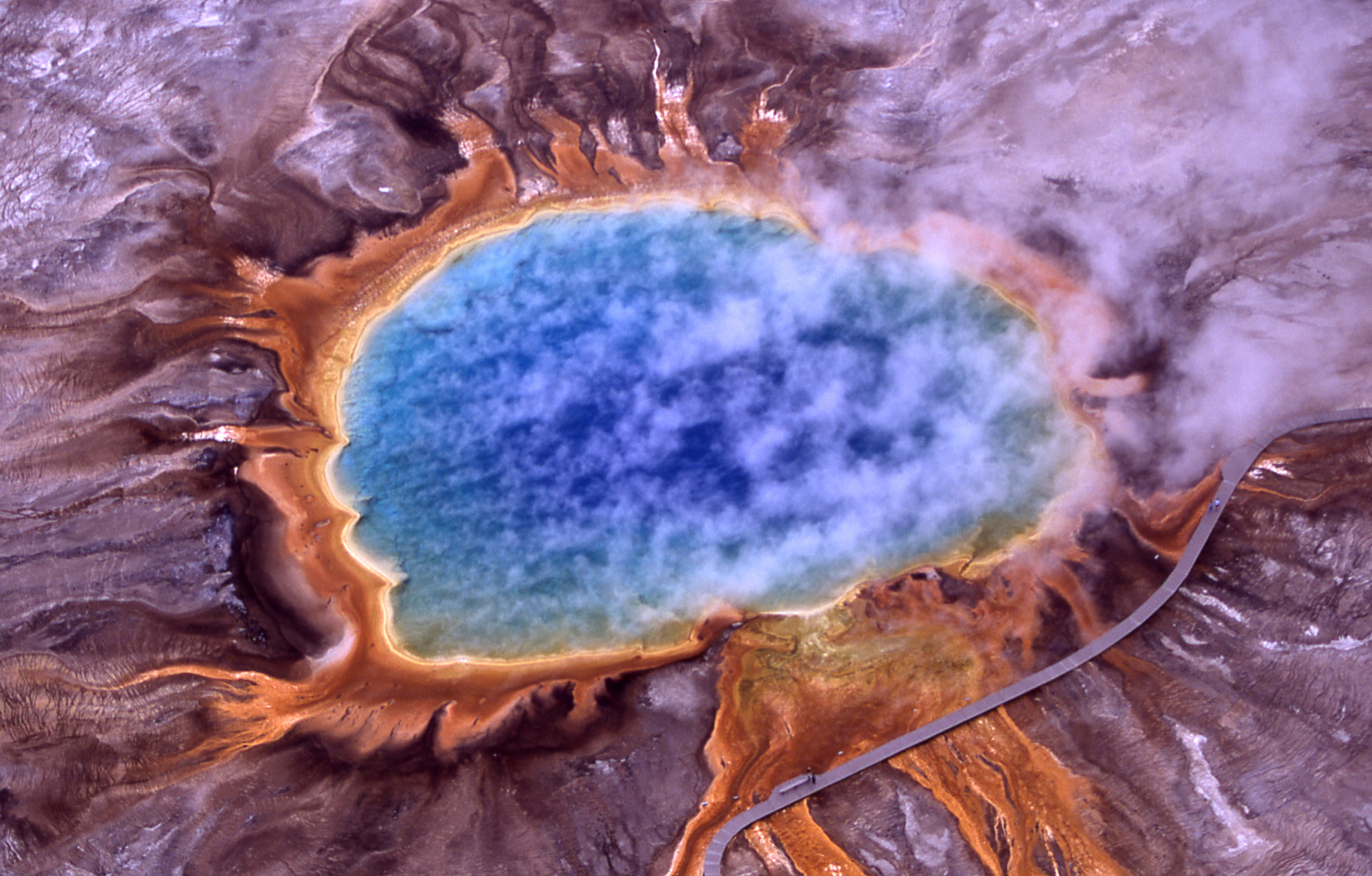
A microbiologist by the name of Rachel J. Whitaker from the university of California was doing discoveries to prove the quote wrong. Yet in fact, it is so true it was almost impossible for her to back her theory up with facts. Then she asked herself, "why not check the hot springs?" That place is so dangerous, one bad step and it could cause serious harm. So as she was stepping on top of the geyser, she had a stick to grab some samples and move fast while still being careful to take the sample to the lab as soon as possible and found extraordinary things. The fact that the microbes that live in hot springs have adopted to the extreme hot environment, they also move to slow to migrate to other habitats; which shows that if they leave for a couple of minutes even seconds they could die.
The idea that many scientists believed that all organisms are simple one, she showed that to be not so true as many thought it was. It shows that there is so much diversity between each microbe, by the time we even get to half, we would go back down to a quarter or less.

picture urls: http://i.livescience.com/images/i/000/024/640/i02/russian-hotspring.jpg?1329861828
http://upload.wikimedia.org/wikipedia/commons/f/f5/Grand_prismatic_spring.jpg

article url: http://www.nytimes.com/2003/08/26/science/microbes-in-hot-springs-test-notion-of-global-travel.html?action=click&module=Search&region=searchResults%230&version=&url=http%3A%2F%2Fquery.nytimes.com%2Fsearch%2Fsitesearch%2F%3Faction%3Dclick%26region%3DMasthead%26pgtype%3DHomepage%26module%3DSearchSubmit%26contentCollection%3DHomepage%26t%3Dqry23%23%2Fmicrobes

Wednesday, March 12, 2014

Attacking todays microbes!


      In today’s world, everyone knows that microbes can go back millions of years ago. They are known to be, “Our old friends.” The researcher under the name of Graham Rook investigated why many humans are known to have really different immune systems and why each person is known to get sicker than others.

            This article attacks the fact that many people are grown by treating small diseases with countless medications. Yet they grow up thinking that it will be the answer for the rest of their lives. Little do they know that, microbes are smart as well and are able to change and evolve into more suitable organisms for their habitat. This means if you grew up treating small and even big sicknesses, the medication used maybe ten years ago won’t help after those ten years. Those microbes are more adapted and need to be treated differently. Knowing that this article would seem bias to most. I am all forward with the fact that medication should be our last form of treating sicknesses especially if it’s not to big of a problem. Tests were shown that by changing diets and exposing to the environment; meaning you are more outside then inside. Would help kill many microbes that are present as of today. Many of these forms are helpful all around. The helpful microbes are not killed in the process and one his helping them and their health by changing their diets and becoming more healthier.


Pictures: http://www.edu.pe.ca/southernkings/Pictures/micro3.jpg
http://microbes.nres.illinois.edu/images/Microbe%20World.jpg

Article: http://www.nytimes.com/roomfordebate/2013/05/27/are-americans-too-obsessed-with-cleanliness/some-microbes-may-be-our-old-friends?action=click&module=Search&region=searchResults%230&version=&url=http%3A%2F%2Fquery.nytimes.com%2Fsearch%2Fsitesearch%2F%3Faction%3Dclick%26region%3DMasthead%26pgtype%3DHomepage%26module%3DSearchSubmit%26contentCollection%3DHomepage%26t%3Dqry269%23%2Fmicrobes

Tuesday, March 4, 2014

Ancient Microbes

            Many research on microbes have shown that they have been living ever since life existed on earth. Those microbes are found on top of the surface and in the water. Some are even thought of being ancient. Microbes are shown to start new and fascinating things. One of those is drilling deep from land and even in the seas. Dr. David R. Boone is a environmental microbiologist from Oregon and his team of 4 other scientists are going with a program that drills in the earth and helps find microbes that are cut out from life above the surface.

            “Many scientists have theorized about it.” As they kept moving forward with the search and they have found a little over 5,000 kinds of microbes. The problem This article faces right away is the fact that its trying to persuade the reader in one single thought. Thus making the article really bias from the get go. Not looking too deep into the microbes found. Most of them could have already been found, but they have migrated deep down. Knowing that many microbes found to this day for example, the niche is known to live where light is barely visible. Maybe these searches could have a flaw that the article did say. Just to keep the point and making it effective. The searches are really interesting that they catch the readers thought. Don’t get me wrong; it’s a good article. Who knows what type of microbes live under us?


Article URL: http://www.nytimes.com/1994/10/04/science/drillers-find-lost-world-of-ancient-microbes.html?action=click&module=Search&region=searchResults%230&version=&url=http%3A%2F%2Fquery.nytimes.com%2Fsearch%2Fsitesearch%2F%3Faction%3Dclick%26region%3DMasthead%26pgtype%3DHomepage%26module%3DSearchSubmit%26contentCollection%3DHomepage%26t%3Dqry263%23%2FMicrobes

Picture URL: http://i.dailymail.co.uk/i/pix/2012/03/28/article-2121683-125FE1BB000005DC-921_233x423.jpg

Tuesday, February 25, 2014

Is microbe transplant possible?

            As of now you may know that microbes and bacteria aid our existence. Yet a simple question like; Can there be a transplant to help the survival of a human, in specific a bacteria transplant? Well questions like these are the reason why science is where it is at now. Way ahead from where it was fifteen to twenty years ago. Dr. Khoruts, a gastroenterologist from the University of Minnesota, came across a patient in 2008 suffering from a gut infection known as Clostridium difficile. The infections were so extreme it had left her in a wheelchair wearin
g diapers. Dr. Khoruts had given the patient some medication which was of no help what so ever. At one point the infection was winning over Khoruts that was a the verge of loosing his patient from a bacteria. Then the idea of doing a transplant, but not any transplant. He would gather bacteria from her husband and place it on the affected area. Surprisingly the infection was getting killed in a matter of weeks.
Scientist are so fascinated about how much bacteria is known to help that the forget to research the bacteria that harms us and why. As the scientist showed that the patient had not a lot of normal bacteria living inside her and caused Clostridium to spread and almost kill her. The doctors and scientist involved were so fascinated they had forgotten to figure out why her normal bacteria count was low and instead focused on the fascinating idea of microbes making up our body.

As this attacks how we can cure deadly microbes in our body, it doesn’t identify why it happens and there fore this article lacks that perspective and forcing to one side of the argument. If it had incorporated how we can prevent such bacteria to colonize inside us it would be a perfect article. Et it lacks and makes it bias.